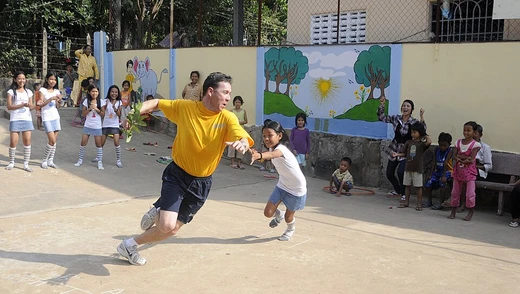
Tic-tac-toe
A solved two-player game with a forced draw under optimal play.

Nabijaczleweli · CC0
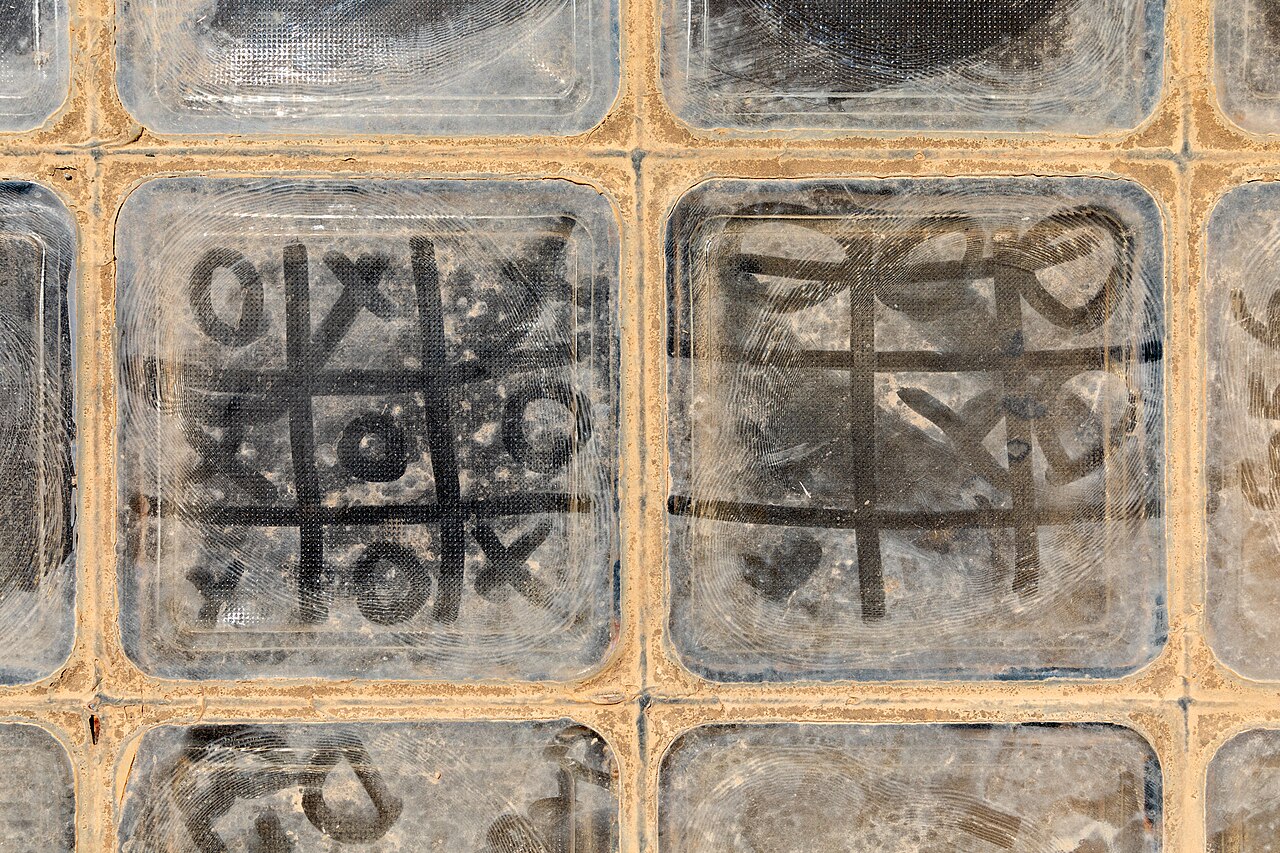
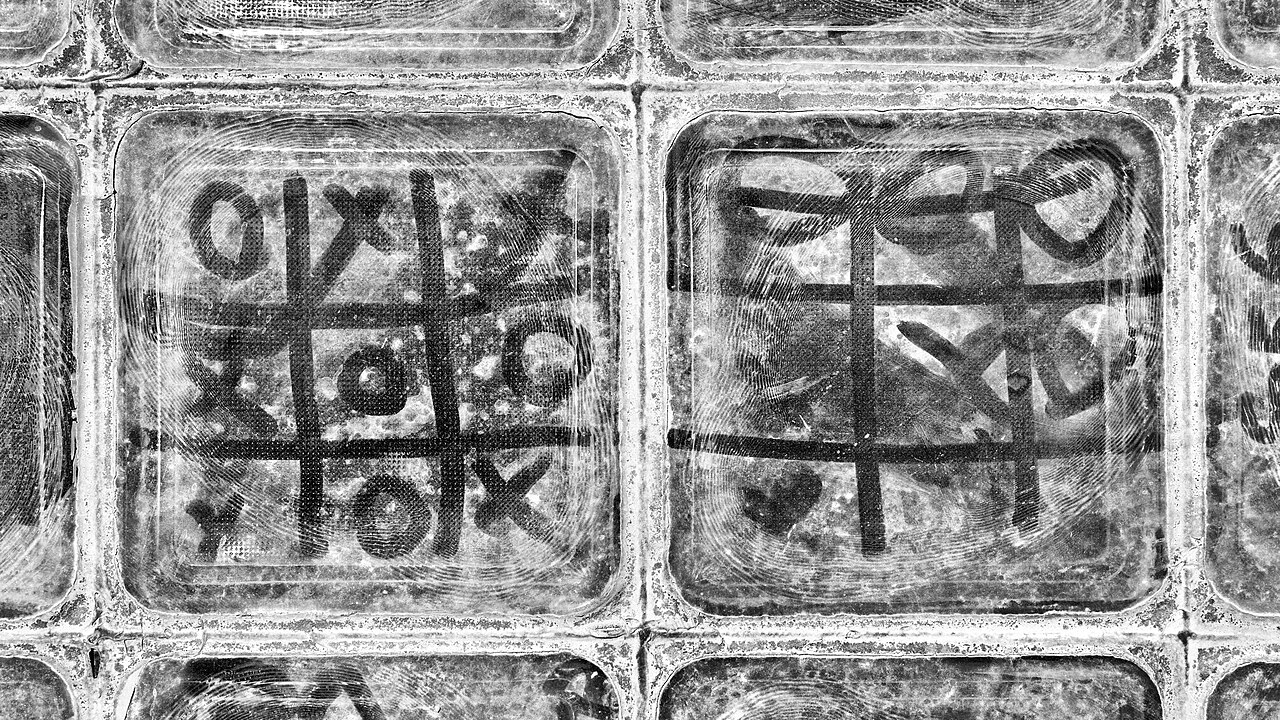
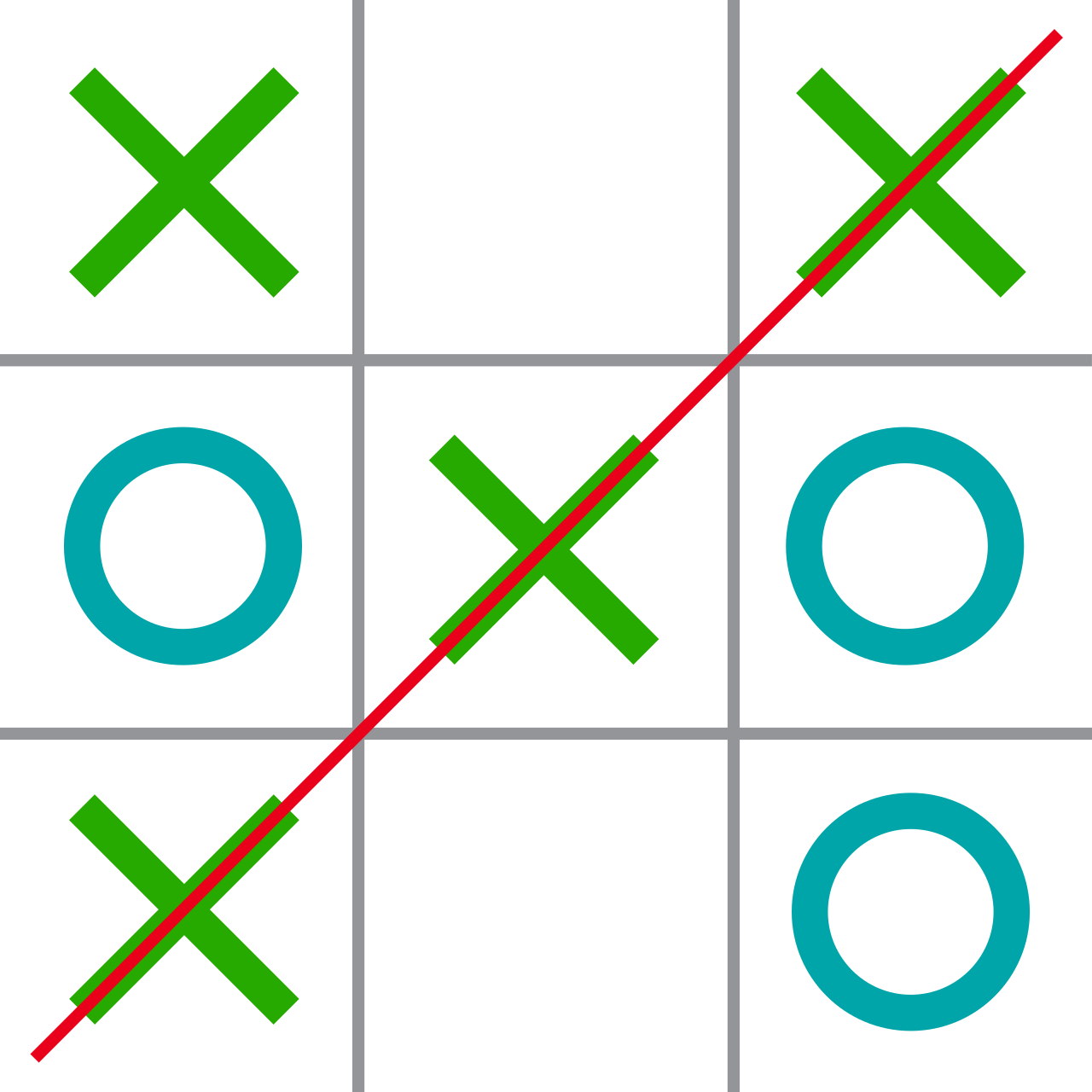
Tic-tac-toe, also known as noughts and crosses or Xs and Os, is a paper-and-pencil game for two players who take turns marking spaces in a three-by-three grid, one with Xs and the other with Os. It is a solved game with a forced draw assuming best play from both players, and it has been used as a pedagogical tool for teaching game theory and artificial intelligence concepts.
- also_known_as
- Noughts and crosses (Commonwealth English), Xs and Os (Canadian or Irish English)
- type
- Paper-and-pencil game
- players
- 2
- grid_size
- 3x3
- solved
- True
Lore & Background
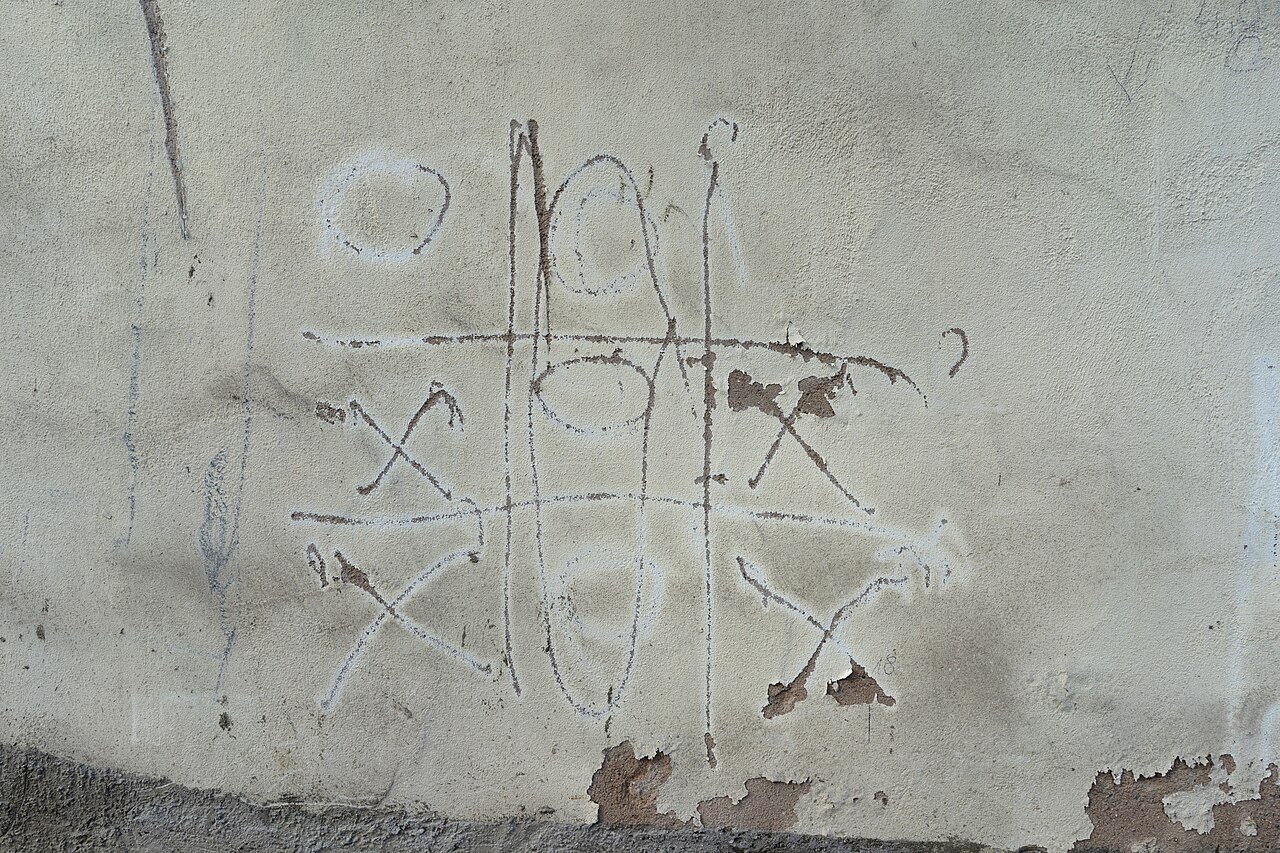
An early variation was played in the Roman Empire around the first century BC, called terni lapilli (three pebbles at a time), where each player had only three pieces and had to move them to empty spaces. Another closely related ancient game is three men's morris, also played on a simple grid. The US renaming of 'noughts and crosses' to 'tic-tac-toe' occurred in the 20th century.
Reader's Guide
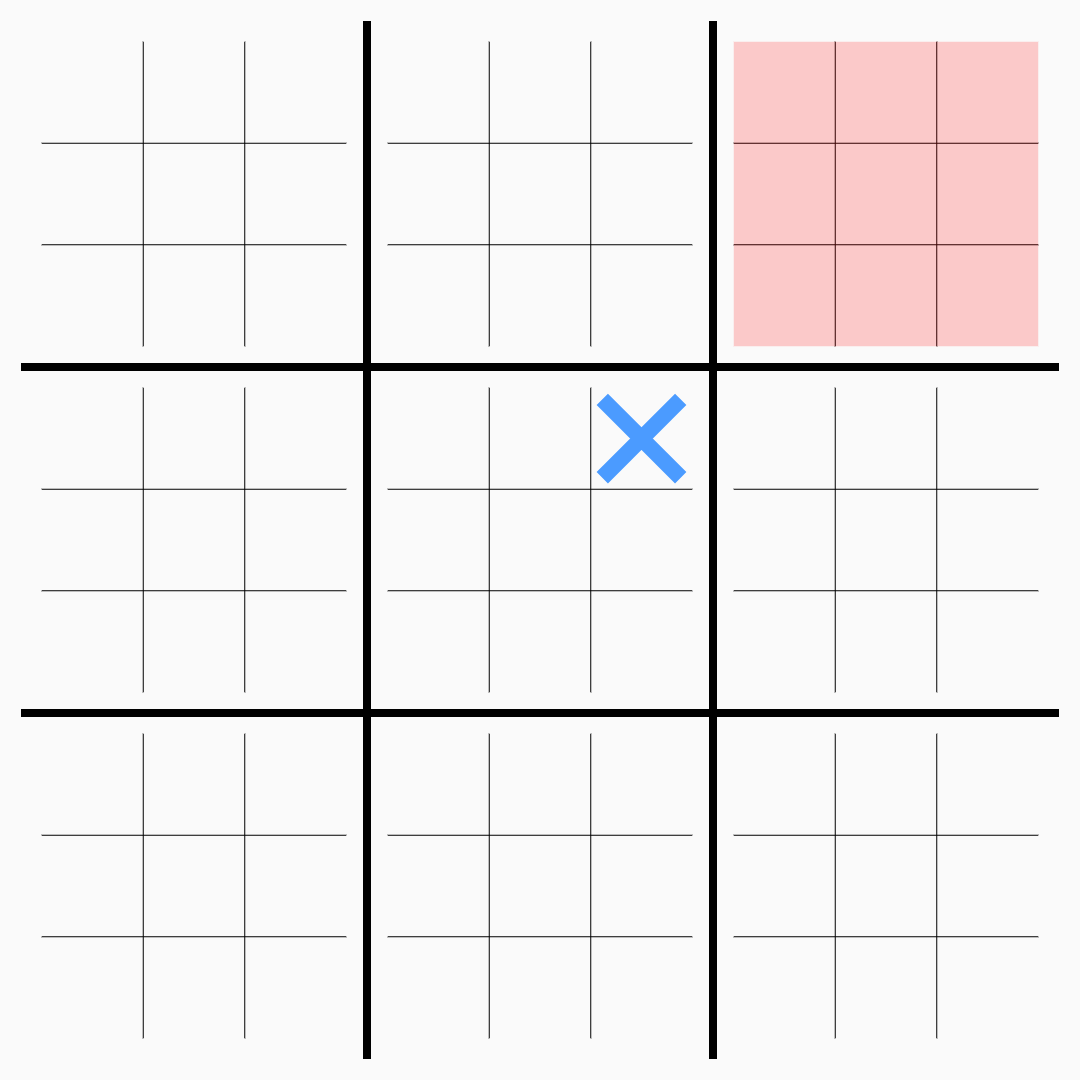
Tic-tac-toe's significance lies in its simplicity and its role as a foundational example in game theory and artificial intelligence. Because it is a solved game with a forced draw under optimal play, it is often used as a pedagogical tool for teaching concepts such as good sportsmanship and the minimax algorithm for searching game trees. The game has been generalized to an m,n,k-game, and Harary's generalized tic-tac-toe is an even broader generalization. It also remains a fixture on browser-based gaming portals, frequently used as an entry-level template for teaching multiplayer web design and logic simulations.
Ancient Roots and the Long Road to a Name
The story of tic-tac-toe stretches far deeper than most casual players realize. In the Roman Empire around the first century BC, a variation called terni lapilli—literally 'three pebbles at a time'—gave each player just three pieces that had to be repositioned across the grid to keep the game going. Chalked grids from this era have been discovered throughout Rome. Related ancient pastimes include three men's morris and the Puebloan game Picaria, both sharing the three-in-a-row objective. The names we use today are far more modern. The full American renaming did not settle until the twentieth century.
A Solved Game and Its Mathematical Landscape
Perhaps the most striking mathematical fact about tic-tac-toe is that it is a fully solved game: when both players make the best possible decisions, the result is always a draw. This certainty is what makes the contest 'futile' between perfect opponents, and it is precisely why the pastime remains a favorite among young children who have not yet internalized the optimal counter-strategies. The combinatorial landscape, while small, is neatly catalogued.
Pioneering Computing and Pedagogical Power
Tic-tac-toe has served as a proving ground for computing since the earliest days of electronic machines. This program, one of the first known video games, let a human opponent face a machine that could play flawlessly, never losing a single match. The game also features prominently in artificial-intelligence education. Because the rules are trivially simple yet the strategic depth is real, tic-tac-toe remains a go-to exercise for teaching game-tree search, the minimax algorithm, and even basic principles of good sportsmanship in the classroom.
Generalizations and the Modern Digital Playground
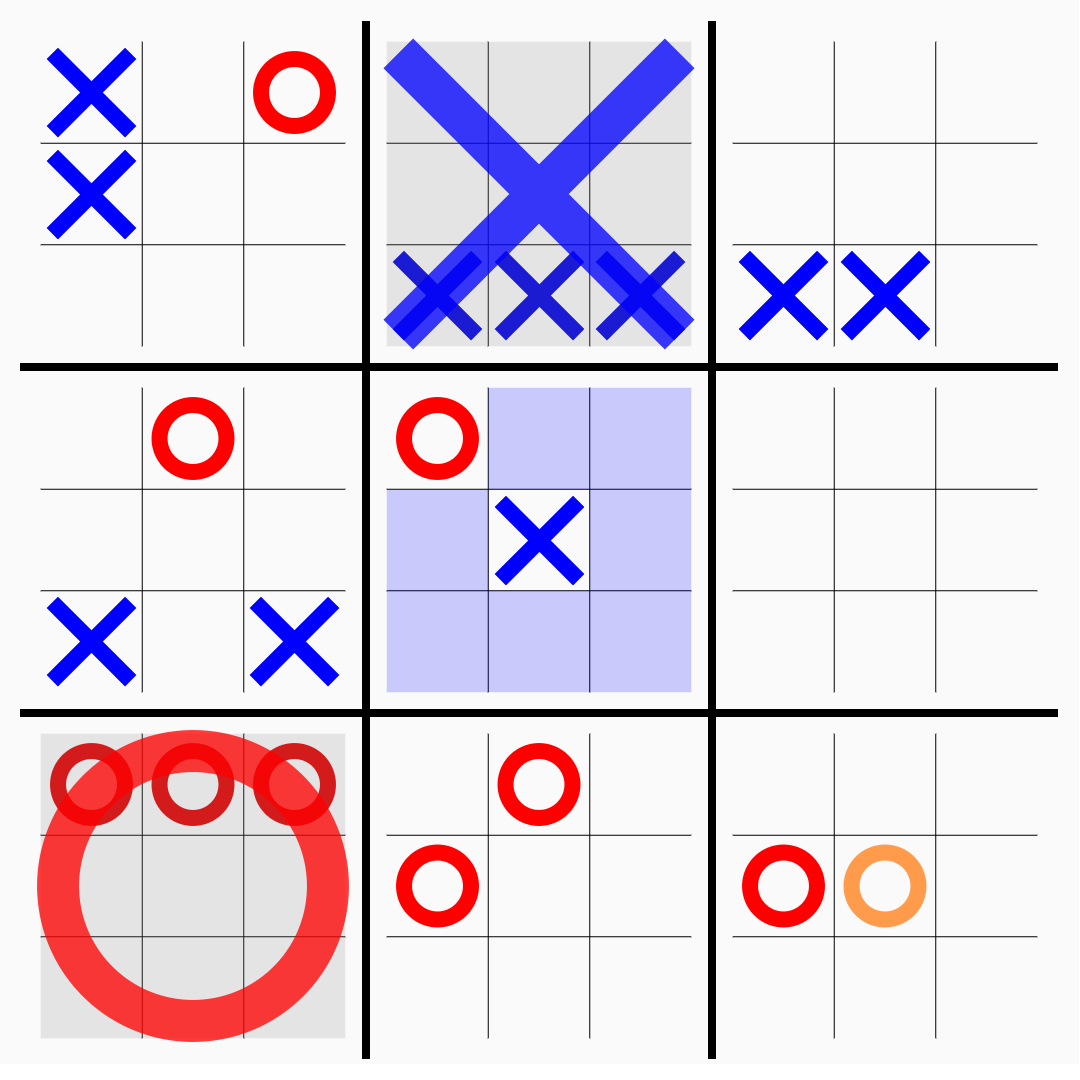
Beyond its humble 3×3 grid, tic-tac-toe sits at the heart of a rich family of generalized games. It can be expressed as a 3,3,3 instance of the broader m,n,k framework, where two players alternate placing stones on an m-by-n board aiming to line up k of their own color. Harary's generalized tic-tac-toe pushes the abstraction even further, and the game can also be modeled as an nd game with n = 3 and d = 2, or as a structure built on an arbitrary incidence system in which cells are points and winning lines are rows—tic-tac-toe's own incidence structure comprising nine points, three horizontal lines, three vertical lines, and two diagonals. In the modern era, the game has become a fixture of casual digital entertainment. Browser-based portals such as Kongregate and CrazyGames continue to host the game, where it frequently serves as an entry-level template for developers learning multiplayer web design and logic simulation.
Gallery
Frequently Asked Questions
What is Tic-tac-toe?
Tic-tac-toe is a two-player paper-and-pencil game in which each participant alternately claims one of nine squares in a 3×3 grid, marking it with an X or an O, and wins by lining up three of their own marks in a row, column, or diagonal.
Can you actually beat Tic-tac-toe?
No—Tic-tac-toe is a mathematically solved game, meaning that if both players choose their moves optimally the result is always a draw. The first player can force a draw, and the second player can also force a draw, so neither side has a winning strategy against perfect opposition.
Why do teachers use Tic-tac-toe in class?
Because the game is small enough to analyze by hand yet rich enough to illustrate core ideas, it has become a go-to pedagogical tool for introducing game theory, the minimax algorithm, and basic artificial-intelligence search strategies to students.
What do you need to play Tic-tac-toe?
Just a flat surface for sketching a 3×3 grid, a pen or pencil, and one opponent—no board, tokens, or other equipment is required.
More in Children'S Games 1-18
Spotted an error? Know more?
This is a living reference — every entry is fact-audited, and reader corrections feed straight into our audit queue. Suggest an edit · See this site's audit record