
Musical chairs
Elimination game where players scramble for chairs.

Moheen Reeyad · CC BY-SA 4.0
Musical chairs is a game of elimination involving players, chairs, and music. It is a staple of many parties worldwide.
- type
- Party game
- gameplay
- Players walk around chairs while music plays; when music stops, players must sit; one player is eliminated each round
- alternate_name
- Trip to Jerusalem
- origin_of_name
- From German 'Reise nach Jerusalem' ('Journey to Jerusalem')
- known_for
- Metaphor for pointless shuffling of people or resources
Lore & Background
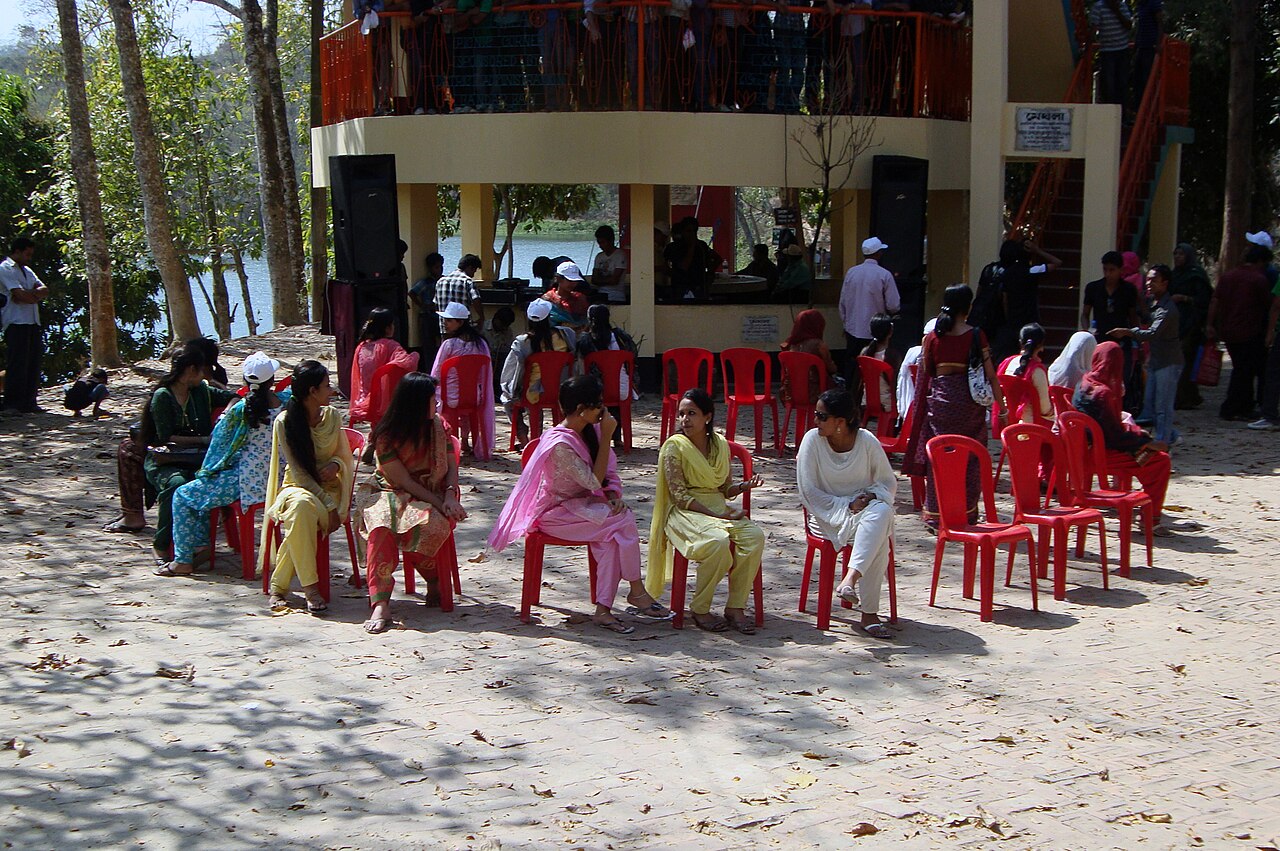
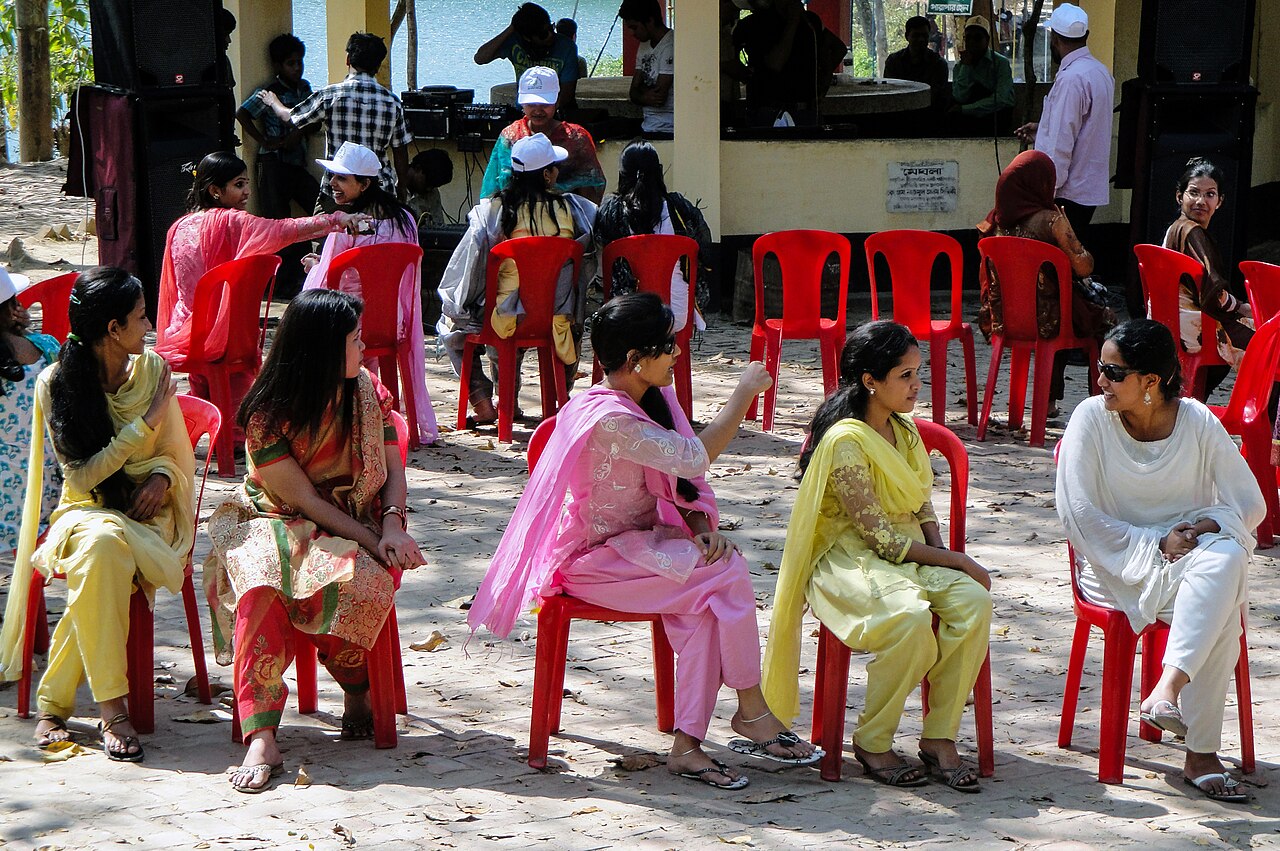
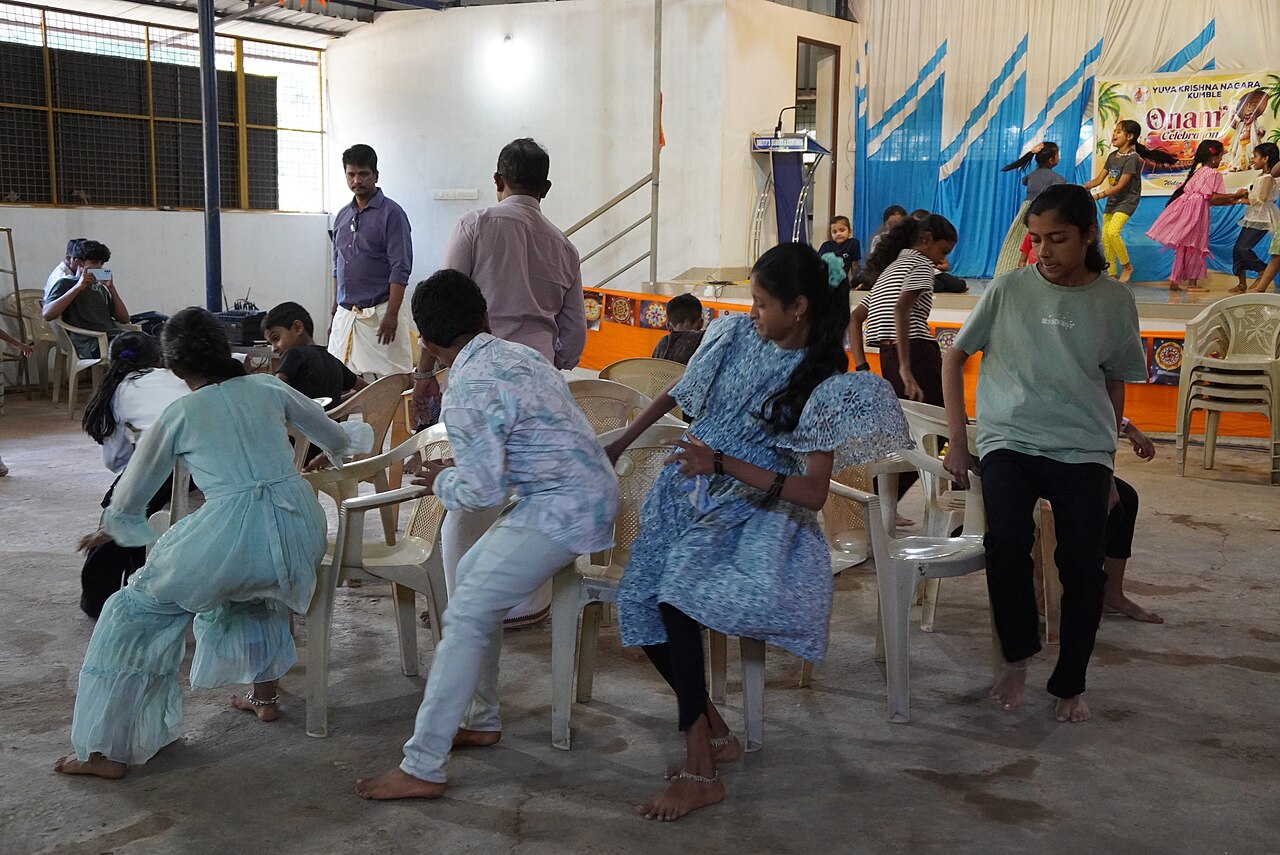
The game is played with a set of chairs arranged in a circle, with one fewer chair than the number of players. While music plays, contestants walk around the chairs. When the music stops abruptly, all players must find their own individual chair to sit on. The player who fails to sit is eliminated, one chair is removed, and the process repeats until only one player remains and is declared the winner. Sometimes, speeding up the music builds suspense when few players remain. The origins of the game's name as 'Trip to Jerusalem' is disputed, but it is known to come from its German name 'Reise nach Jerusalem' ('Journey to Jerusalem'). One theory suggests the name was inspired by the Crusades, wherein several heavy losses were incurred. Another theory suggests it was inspired by the immigration of Jews from the diaspora to Palestine, wherein spaces on ships were limited. None of these theories have been confirmed. The term 'playing musical chairs' is also a metaphor for describing any activity where items or people are repeatedly and usually pointlessly shuffled among various locations or positions. It can refer to a condition where people have to expend time searching for a resource, such as traveling from one gasoline station to another during a shortage, or to political situations where one leader replaces another only to be rapidly replaced due to instability.
Reader's Guide
Musical chairs holds significance as a widely recognized party game and a cultural metaphor. Its simple elimination format—players walking around chairs while music plays, then scrambling to sit when the music stops—has made it a staple of parties worldwide. The game's alternate name, 'Trip to Jerusalem,' carries disputed historical theories linking it to the Crusades or Jewish immigration to Palestine, though none are confirmed. Beyond gameplay, 'playing musical chairs' has entered common language as a metaphor for pointless shuffling of people or resources, such as in political cabinet reshuffles or during resource shortages. The game has also appeared in popular culture, notably in the Andrew Lloyd Webber musical 'Evita' during the number 'The Art of the Possible,' where it serves as a symbolic metaphor of Juan Perón's rise to power. The game's enduring appeal lies in its blend of chance, speed, and physical competition, making it both a simple children's activity and a rich source of cultural reference.
Did You Know?
- The game's alternate name 'Trip to Jerusalem' comes from its German name 'Reise nach Jerusalem' ('Journey to Jerusalem').
- One theory suggests the name was inspired by the Crusades, wherein several heavy losses were incurred.
- The game is featured in the Andrew Lloyd Webber musical 'Evita' during the number 'The Art of the Possible'.
- The term 'playing musical chairs' is a metaphor for any activity where items or people are repeatedly and usually pointlessly shuffled.
Gameplay & the Mechanics of Elimination
Musical chairs operates on a deceptively simple elimination structure that has made it a fixture at gatherings around the globe. The setup requires arranging a circle of chairs with exactly one fewer seat than the number of participants—so nine players would face eight chairs. While a musical selection plays, all contestants circle the arrangement, pacing back and forth in anticipation. The moment the music cuts off abruptly, every player scrambles to claim an individual seat. Whoever is left standing is immediately out of the game. A single chair is then pulled from the circle, and the remaining players resume their circling for another round. This cycle of walking, stopping, and elimination continues, narrowing the field round after round, until a sole survivor is crowned the winner. In the final stretches, when only a handful of players remain, organizers often accelerate the tempo of the music, injecting a surge of tension and excitement that heightens the drama of each successive stop.
The Disputed Origins of the Name
The title most people know—musical chairs—actually carries a more evocative name in its original form. The game is known in German as Reise nach Jerusalem, which translates to "Journey to Jerusalem," and this phrasing is the source of the English variant "Trip to Jerusalem." The precise reason behind this naming remains a matter of debate, with no single explanation having gained definitive scholarly acceptance. One proposed theory links the name to the era of the Crusades, suggesting that the repeated losses and setbacks suffered during those campaigns inspired the metaphor of a frustrating, ultimately futile journey. A second theory points instead to the historical immigration of Jewish communities from the diaspora to Palestine, where the limited number of available spaces on ships bound for the promised land created a parallel to the game's diminishing seats. Neither hypothesis has been conclusively verified, leaving the true etymology of the name firmly in the realm of speculation.
"Playing Musical Chairs" as a Cultural Metaphor
Beyond the party game itself, the phrase "playing musical chairs" has permeated everyday language as a vivid metaphor for any situation in which people or objects are repeatedly shuffled between positions, often to no meaningful purpose. The expression captures the frustration of watching resources or personnel rotate through roles without any lasting stability or progress. It is commonly applied to scenarios of scarcity, such as drivers hopping from one gas station to another during a fuel shortage, each hoping to find a pump with enough supply. In the political sphere, the metaphor takes on particular force when describing unstable governing systems where one leader is swiftly replaced by another, only for that successor to be displaced in turn—a pattern observers liken to a perpetual cabinet reshuffle. The image of players frantically circling a shrinking ring of seats perfectly encapsulates the anxiety and pointlessness inherent in these real-world situations of constant, unproductive turnover.
Musical Chairs on Stage and Screen
The game has found a place in the broader cultural landscape through its use as a narrative and symbolic device in performance arts. In the original staging of Andrew Lloyd Webber's musical Evita, a scene during the number "The Art of the Possible" features Juan Perón and a group of military officers engaged in a round of musical chairs. Perón emerges as the victor, and the sequence functions as a pointed allegory for his political ascent, suggesting that power is seized through a kind of frantic, competitive scramble. In that episode, the young character Jessie, portrayed by actress Barbie Forteza, takes part in the game, bringing the classic party staple to a new audience through the medium of broadcast entertainment.
Gallery


Frequently Asked Questions
What is Musical chairs?
Musical chairs is a classic party game of elimination in which players circle a set of chairs while music plays, then scramble to grab a seat the moment the music cuts out. It is a staple at children's parties around the world.
What is the alternate name for Musical chairs and where does it come from?
The game is also known as "Trip to Jerusalem," a name borrowed from the German phrase "Reise nach Jerusalem," which translates to "Journey to Jerusalem."
How does a round of Musical chairs actually work?
Players walk around a circle of chairs while music plays, and when the music stops everyone must immediately sit down. Whoever fails to find a chair is eliminated, and one chair is removed before the next round begins.
Why is Musical chairs used as a metaphor in everyday language?
Because the game involves people constantly shifting positions for no real gain, it has become a common shorthand for the pointless back-and-forth shuffling of people or resources in organizations and politics.
How does the Musical chairs game end?
One player is eliminated each round, and the process repeats with fewer chairs until a single player remains as the winner.
More in Children'S Games 1-18
Spotted an error? Know more?
This is a living reference — every entry is fact-audited, and reader corrections feed straight into our audit queue. Suggest an edit · See this site's audit record