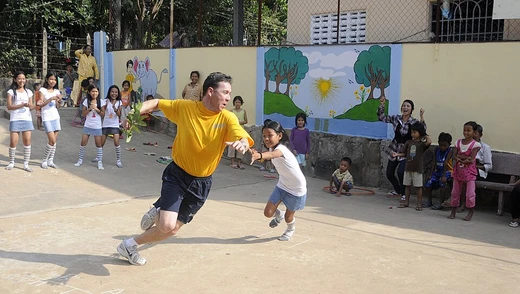
Rock paper scissors
A hand game used for fair decision-making worldwide.

DMacks ( talk ) · CC BY-SA 3.0
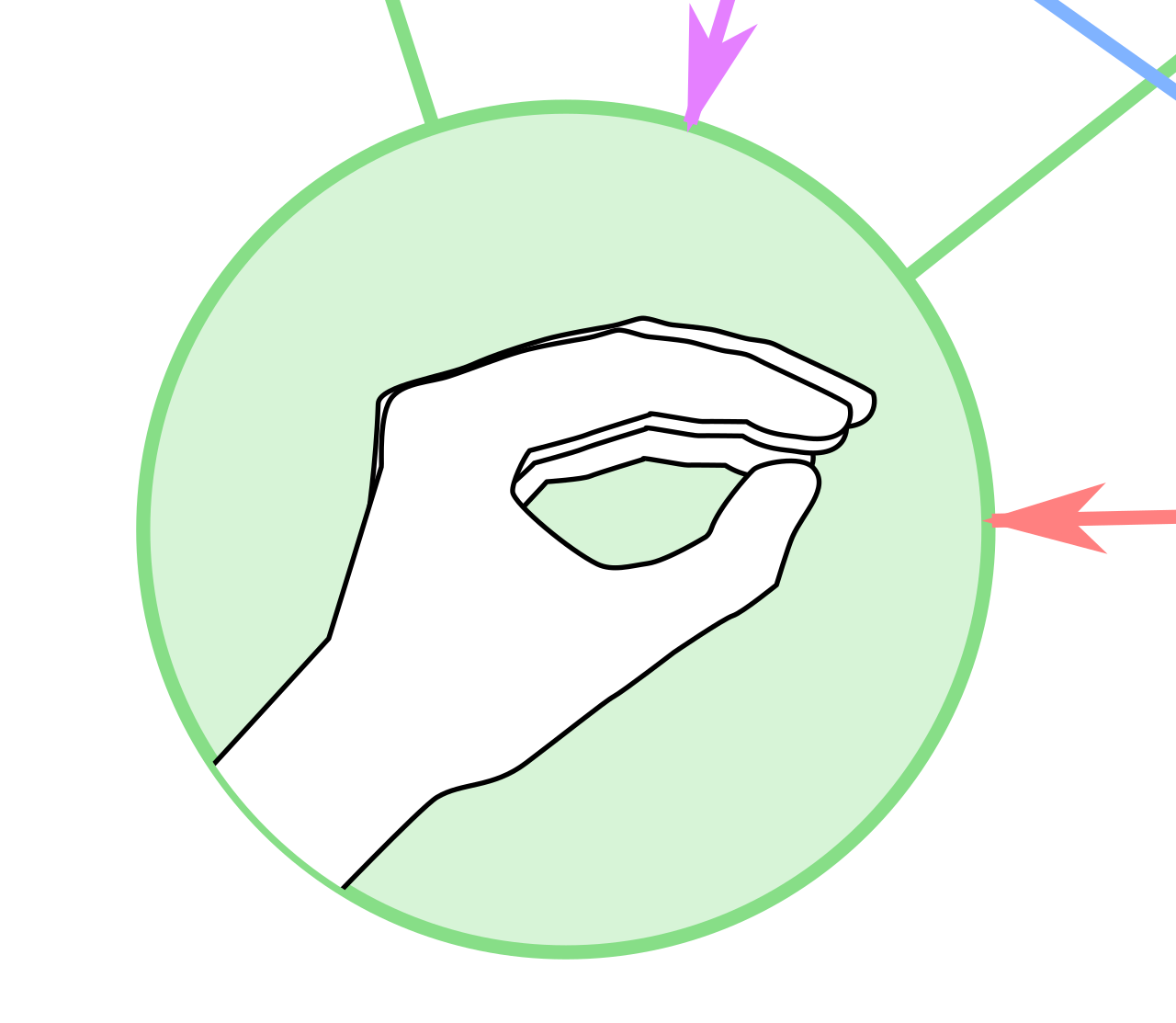
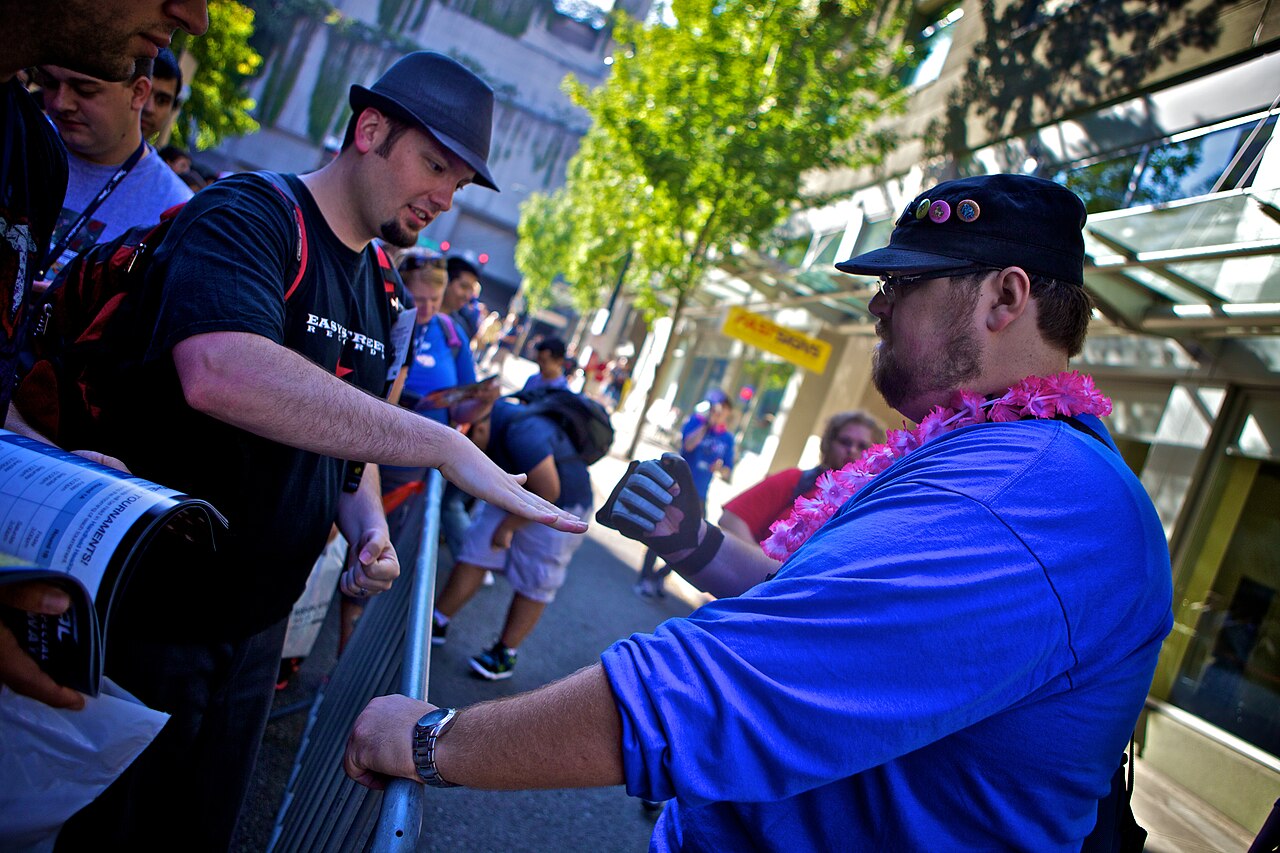
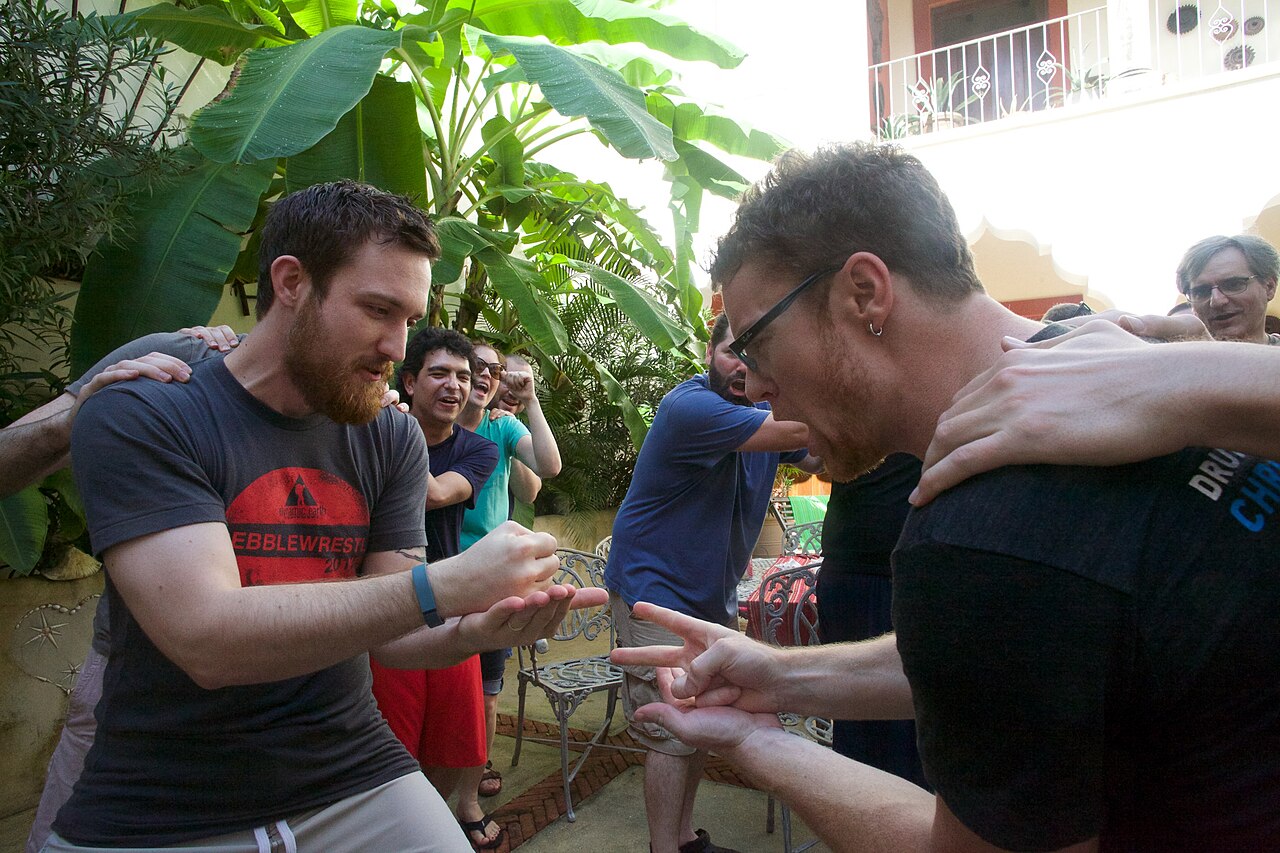
Rock paper scissors is an intransitive hand game, usually played between two people, in which each player simultaneously forms one of three shapes with an outstretched hand: rock (a closed fist), paper (a flat hand), and scissors (a fist with the index and middle fingers extended). It is a simultaneous, zero-sum game with three possible outcomes: a draw, a win, or a loss. The earliest form of a rock paper scissors-style game originated in China and was subsequently imported into Japan, where it reached its modern standardized form, before spreading throughout the world in the early 20th century. It is often used as a fair method of choosing between two options, similar to coin flipping or drawing straws.
- Type
- Intransitive hand game
- Origin
- China (earliest form); Japan (modern standardized form)
- Number of players
- Two
- Possible outcomes
- Draw, win, or loss
- Common names
- Rochambeau, Roshambo, Jan-ken-pon, Bato Bato Pik
Lore & Background
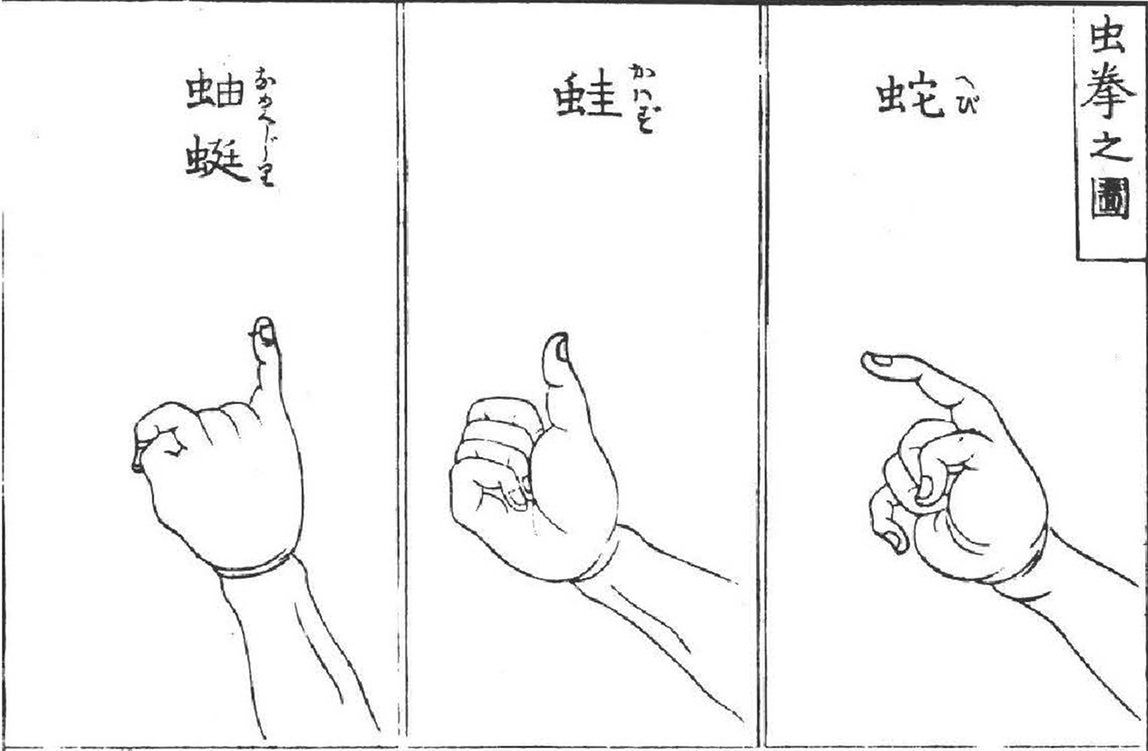
In the book, the game was called shoushiling. From China, the game was brought to Japan, where the earliest sansukumi-ken was mushi-ken, a version imported directly from China. The most popular sansukumi-ken in Japan was kitsune-ken, which required gestures with both hands. Today, the best-known sansukumi-ken is called jan-ken, which uses rock, paper, and scissors signs and is the direct source of the modern version.
Reader's Guide
Rock paper scissors is significant as a simple, universally recognized method for settling disputes or making unbiased group decisions. Unlike truly random selection methods, it can be played with some degree of skill by recognizing and exploiting non-random behavior in opponents. The game spread beyond East Asia by the early 20th century, especially through increased Japanese contact with the West. Its English-language name is taken from a translation of the names of the three Japanese hand-gestures. The game is known by several other names such as Rochambeau, Roshambo, and Jan-ken-pon. In different countries, the order of the three items in the name varies. The game is often chanted with an exclamation of 'shoot' at the moment players reveal their choice.
Did You Know?
- In Japan, the game jan-ken uses rock, paper, and scissors signs and is the direct source of the modern version.
- In New Zealand, the Māori name for the game is pēpa, kutikuti, kōhatu (paper, scissors, rock).
Ancient Roots and East Asian Evolution
In that Chinese context, the game carried names like shoushiling, huozhitou, and huaquan. From China, the concept migrated to Japan, where it spawned several distinct variants over the centuries. The earliest Japanese form, mushi-ken, used three fingers to represent a frog, a slug, and a snake in a cycle of mutual defeat—a curious distortion likely born from a confusion between Chinese characters for a venomous centipede and those for a slug. A more elaborate two-handed game called kitsune-ken pitted a supernatural fox against a village head and a hunter. The version we recognize today, jan-ken, emerged as a refinement of these earlier Chinese-influenced games introduced during the seventeenth century, crystallizing into its modern rock-paper-scissors form in the late nineteenth century, straddling the Edo and Meiji periods.
A Game with Many Names
The modern game carries a remarkable variety of names across cultures. In North America and the United Kingdom, players most commonly say "rock, paper, scissors" or "scissors, paper, stone," though records from the early to mid-1900s also show the ordering "rock, scissors, paper." Australia presents a patchwork: New South Wales favors "scissors, paper, rock," while Victoria, South Australia, and Western Australia use "rock, paper, scissors," and Queensland prefers "paper, scissors, rock." New Zealand's English-speaking majority typically says "paper, scissors, rock," and in Māori the game is called pēpa, kutikuti, kōhatu. The English name itself is essentially a direct translation of the Japanese words for the three hand gestures, even though the Japanese call the game something entirely different. The true origin of that name remains uncertain, with theories ranging from phonetic resemblance to the Japanese jan-ken-pon to a statue of Rochambeau in a Washington, DC neighborhood.
The Ritual of the Throw
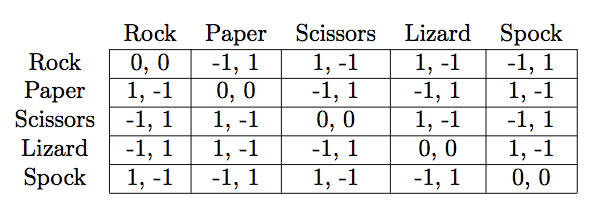
Playing the game follows a recognizable physical ritual. Players typically begin by counting to three aloud or chanting the game's name syllable by syllable—raising one clenched fist and swinging it down onto the other hand with each beat. On what would be the fourth count, both players simultaneously extend their chosen shape toward one another, often punctuated by a shouted "shoot." This core sequence admits numerous regional and personal variations. Some players throw immediately on the third count, landing the reveal on the word "scissors." Others stretch the ritual to five beats, inserting an extra "Says!" before the final "Shoot!" Still others reverse the order to "Scissors! Paper! Rock!" or replace the verbal count entirely with three rhythmic hand shakes before the throw. The underlying logic remains intransitive and zero-sum: rock defeats scissors, scissors defeats paper, paper defeats rock, and identical choices produce a draw that is usually replayed until a winner emerges.
Fairness Meets Strategy
Rock paper scissors is widely employed as a fair mechanism for settling disputes or making unbiased choices between two options, functioning much like a coin flip, a straw draw, or a roll of the dice. Its appeal lies in the apparent symmetry of the three gestures—no single shape holds an inherent advantage over the others across the full cycle. Yet unlike genuinely random selection methods, the game harbors a layer of genuine skill. Because human opponents are rarely perfectly random, a sharp player can observe patterns, habits, or psychological tendencies in an adversary's choices and exploit them. A player who notices a tendency to favor rock after a loss, for instance, can anticipate and counter with paper. This blend of accessible fairness and exploitable human behavior makes the game simultaneously a simple tiebreaker and a subtle contest of reading one's opponent, a duality that has sustained its popularity from its Han-dynasty origins through its global spread in the early twentieth century.
Gallery

Frequently Asked Questions
Who is Rock paper scissors?
Rock paper scissors is a two-player hand game in which each participant simultaneously chooses one of three hand shapes—rock, paper, or scissors—to determine a winner. It is one of the most universally recognized decision-making games on Earth, known by many local names such as Rochambeau, Roshambo, and Jan-ken-pon.
What are Rock paper scissors's powers and role?
The game runs on a simple intransitive cycle: rock crushes scissors, scissors cut paper, and paper wraps rock. Every round resolves into exactly one of three outcomes—a draw, a win, or a loss—making it a zero-sum contest that blends chance with reading your opponent.
How does Rock paper scissors's story end?
There is no fixed narrative ending; each round closes instantly with a win, loss, or tie, and play can continue indefinitely. In competitive settings the match simply concludes once one player reaches a pre-agreed number of victories.
Why is Rock paper scissors important?
It provides a quick, impartial way to settle disputes and make fair decisions across virtually every culture on the planet. Because it requires no equipment and only three basic hand shapes, it has spread globally since the early twentieth century and remains a staple of children's play.
More in Children'S Games 1-18
Spotted an error? Know more?
This is a living reference — every entry is fact-audited, and reader corrections feed straight into our audit queue. Suggest an edit · See this site's audit record