Seesaw
A lever-based playground fixture with a back-and-forth motion.

Quincy Morgan , Temaki contributors · CC0
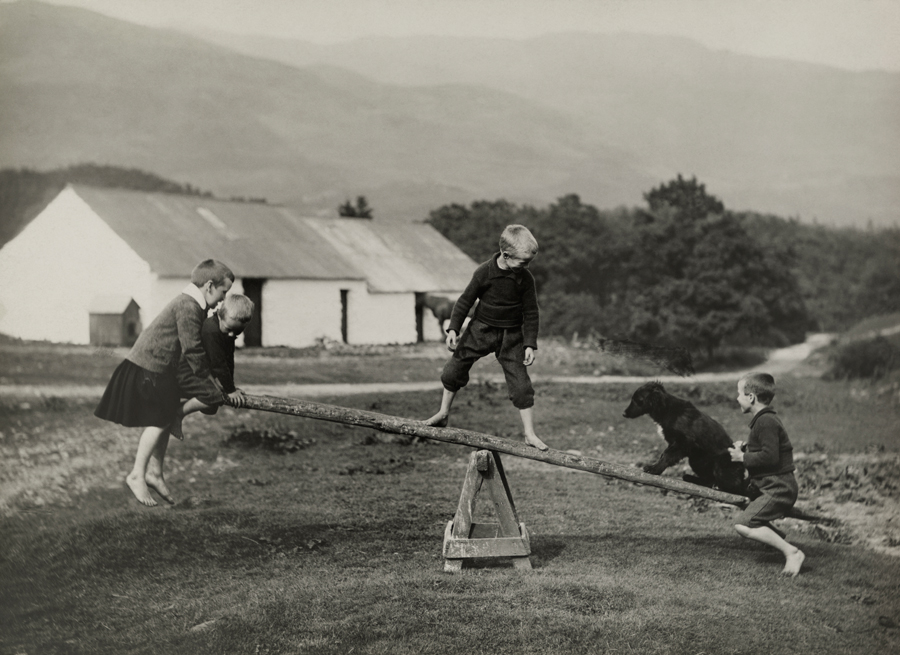
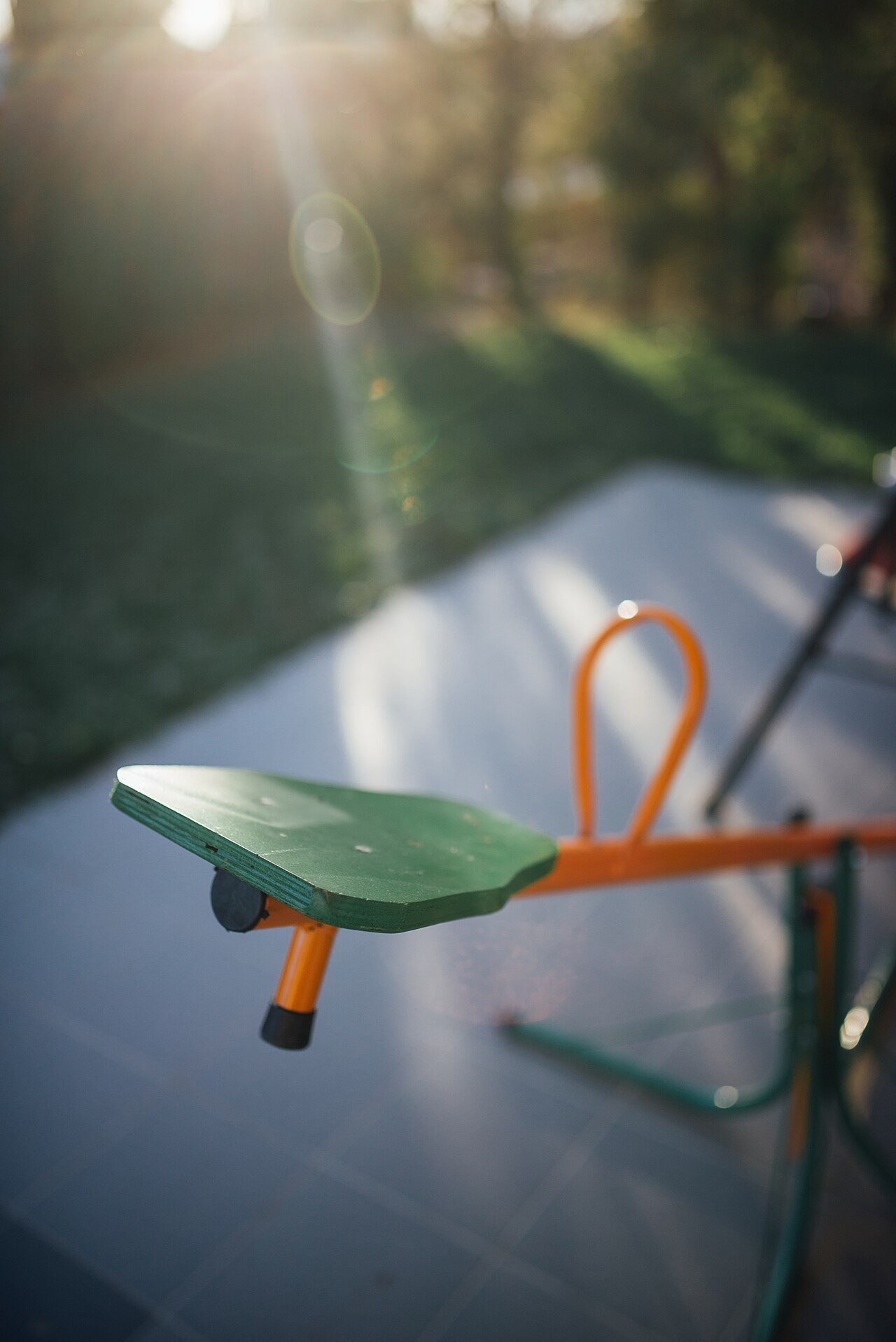
A seesaw (also known as a teeter-totter in North America) is a long, narrow board supported by a single pivot point, most commonly located at the midpoint between both ends; as one end goes up, the other goes down. These are most commonly found at parks and school playgrounds. Mechanically, a seesaw is a lever consisting of a beam and fulcrum with the effort and load on either side.
- field
- Playground equipment, simple machine (lever)
- known_for
- Back-and-forth motion; lever mechanism; children's play
- name_origin
- Anglicisation of French ci-ça (this-that); also possibly from repetitive motion of a saw
- alternative_names
- Teeter-totter (northern inland and westernmost US); tilt or tilting board (southeastern New England); ridey-horse (Appalachia); hickey-horse (coastal North Carolina)
Lore & Background
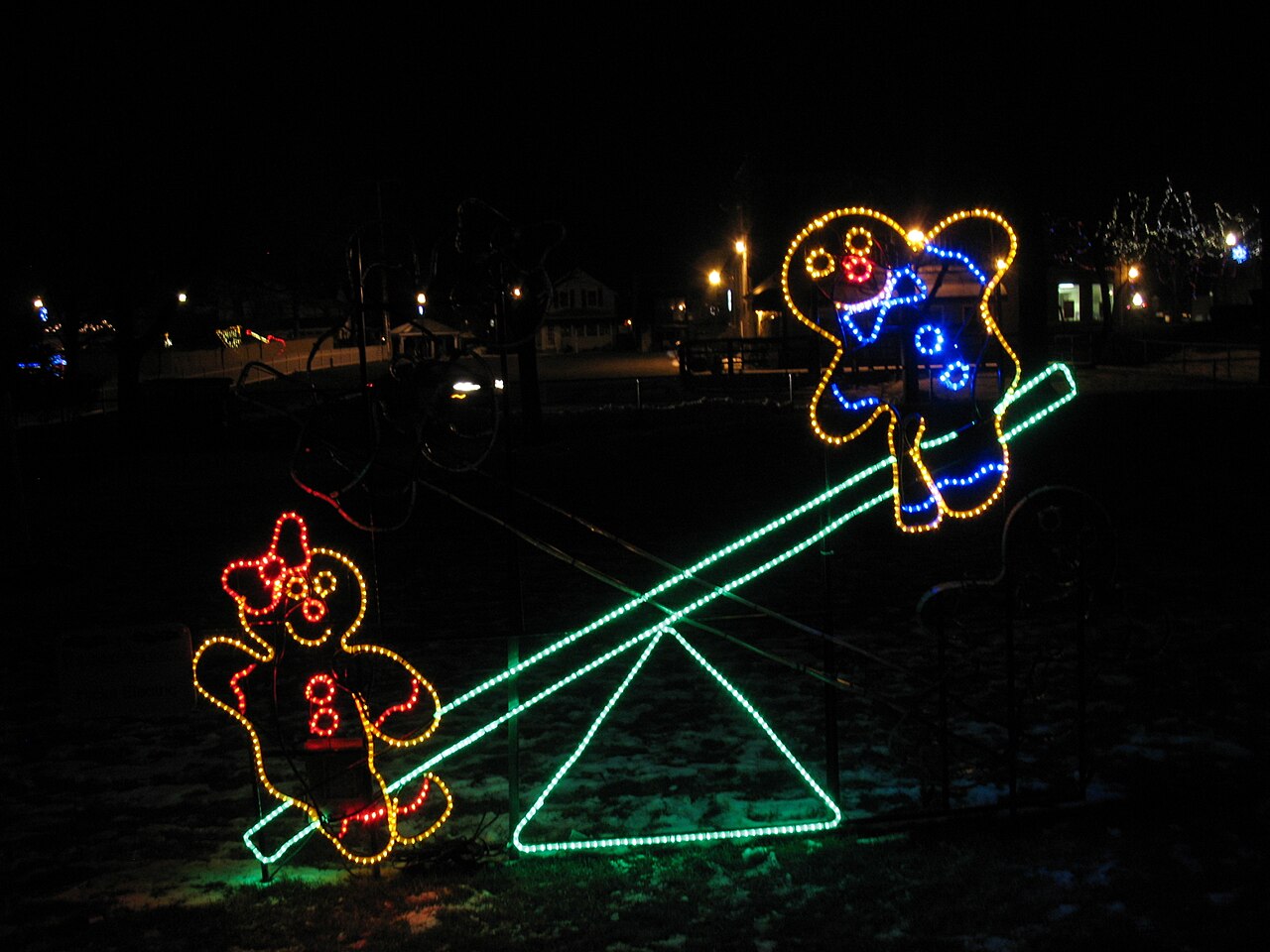
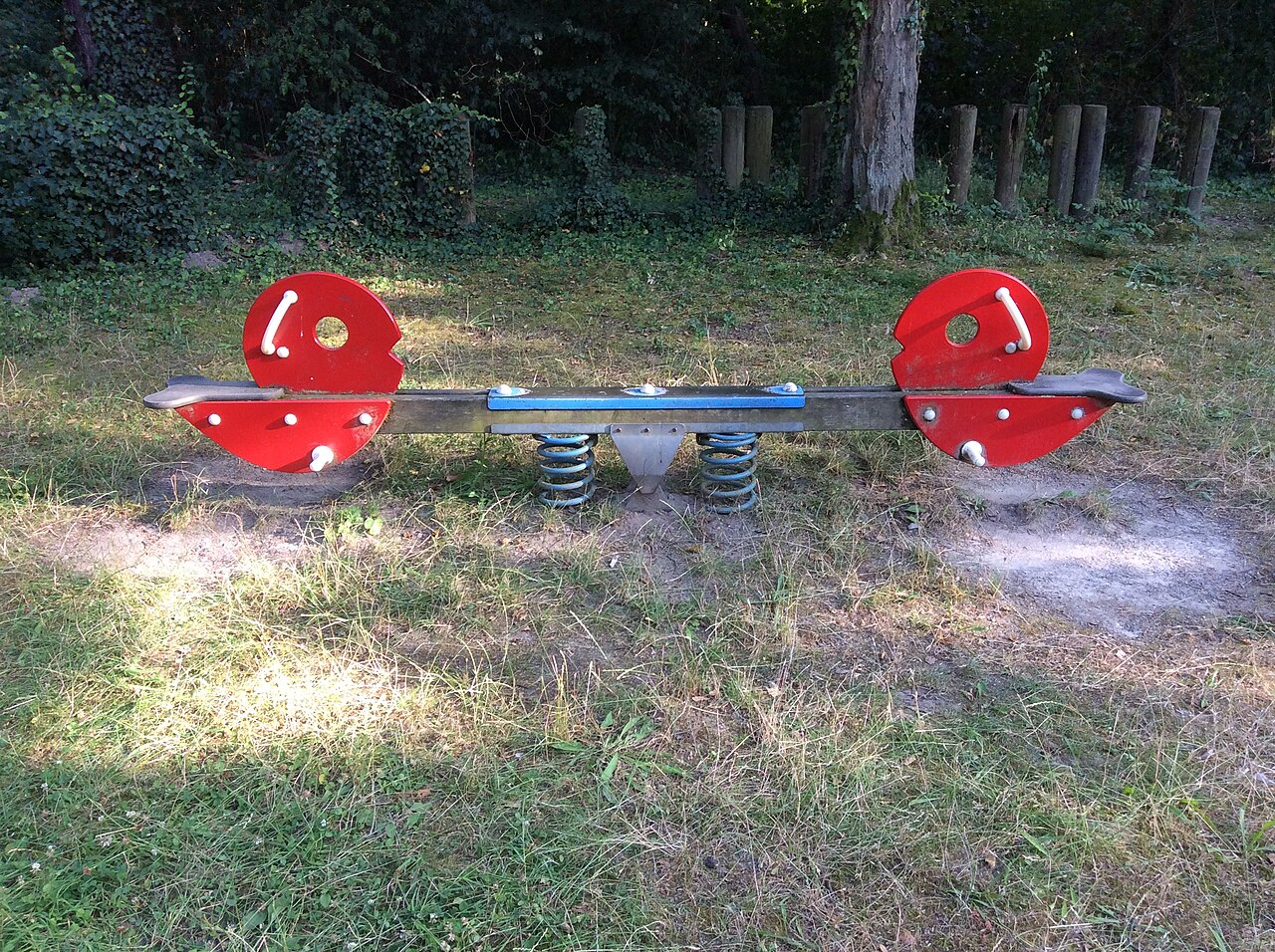
The most common playground design of seesaw features a board balanced in the center. A person sits on each end, and they take turns pushing their feet against the ground to lift their side into the air. Playground seesaws usually have handles for the riders to grip as they sit facing each other. One problem with the seesaw's design is that if a child allows themself to hit the ground suddenly after jumping, or exits the seesaw at the bottom, the other child may fall and be injured. For this reason, seesaws are often mounted above a soft surface such as foam, wood chips, or sand. Seesaws are also manufactured in shapes designed to look like other things, such as airplanes, helicopters, and animals. Seesaws, and the eagerness of children to play with them, are sometimes used to aid in mechanical processes. For example, at the Gaviotas community in Colombia, a children's seesaw is connected to a water pump. The name 'seesaw' or its variant 'see-saw' is a direct Anglicisation of the French ci-ça, meaning literally, this-that, seemingly attributable to the back-and-forth motion. The term may also be attributable to the repetitive motion of a saw, possibly from a combination of 'scie' (French for 'saw') with the Anglo-Saxon term 'saw'. Another possibility is the apparent appearance, disappearance, and re-emergence of the person seated opposite, as they rise and fall against a changing background: 'I see you', followed by 'I saw you'.
Reader's Guide
The seesaw is significant as a simple lever mechanism that has been a staple of playgrounds worldwide. Its design—a beam and fulcrum—illustrates basic physics principles of balance and mechanical advantage. The seesaw's cultural reach extends beyond recreation: at the Gaviotas community in Colombia, a children's seesaw was connected to a water pump, demonstrating how play can be harnessed for practical mechanical processes. The seesaw's legacy includes linguistic interest, as its many regional names—teeter-totter, tilt, ridey-horse, hickey-horse—reflect patterns of settlement and dialect in the United States. The term 'seesaw' itself is an example of reduplication, typical of words indicating repeated activity. In the early 2000s, seesaws were removed from many playgrounds in the United States citing safety concerns, though some have questioned whether the fun provided outweighs the safety risk. The seesaw remains a recognizable symbol of childhood play and a simple machine that continues to appear in varied contexts.
Did You Know?
- The name 'seesaw' is an Anglicisation of the French ci-ça, meaning 'this-that'.
- At the Gaviotas community in Colombia, a children's seesaw is connected to a water pump.
- In the early 2000s, seesaws were removed from many playgrounds in the United States citing safety concerns.
Roots in Agrarian Spirit and Village Life
Korean traditional games trace their origins to the peninsula's deep agrarian past. For centuries, communities lived under the conviction that unseen spirits guarded the land, the crops, and the livestock. Rituals of exorcism, communal singing, and dancing were performed to secure harvests and animal health, and from this spiritual, collective soil the games gradually took shape. What began as sacred or ceremonial acts slowly transformed into recreational play, even as the original folk beliefs receded from everyday awareness. The games endured precisely because they were woven into the rhythms of village existence—tied to the seasons, to festivals, and to the natural environment surrounding each settlement. This origin in shared spiritual practice lends the games a quality that goes beyond simple entertainment; they carry the living memory of a worldview in which human activity was inseparable from the forces of nature and the community's collective well-being.
A Mosaic of Regional Names and Rules
One of the most striking features of these games is their regional diversity. The same core mechanic can carry different names and slightly altered rules depending on where it is played. In Gyeonggi Province, for instance, the game known elsewhere as Gonu is called 'Gonu, Goni, Ggoni,' and local variants such as pond, line, or pumpkin gonu reflect community-specific adaptations. This pattern repeats across the board: top-spinning games shift their titles from region to region, and jegichagi's name changes similarly. The games themselves span a wide spectrum—board dice play like yutnori, full-body wrestling in ssireum, the dexterity of gonggi with its small pebbles, the cooperative launch of neolttwigi, and the strategic arrow-throwing of tuho. Most require little more than hands, feet, and open ground, making them accessible regardless of wealth or location. This low barrier to entry, combined with local variation, allowed the games to flourish across the entire peninsula and remain part of daily life for generations.
From Royal Courts to Common Ground
The social history of these games reveals a fascinating arc from elite privilege to universal participation. During the Joseon dynasty it was elevated as a Confucian pursuit, played by figures as prominent as Prince Yangnyong and King Hyeonjong alongside their families. Over time the game crossed class boundaries and is now enjoyed by people of all backgrounds. Ssireum followed a similar trajectory, evolving from ancient tribal combat rituals and self-defense practice into a celebrated national sport with widely attended annual competitions. This movement from the sacred and the elite to the communal and the recreational underscores the games' enduring democratic spirit.
Seasonal Rhythms and Communal Bonds
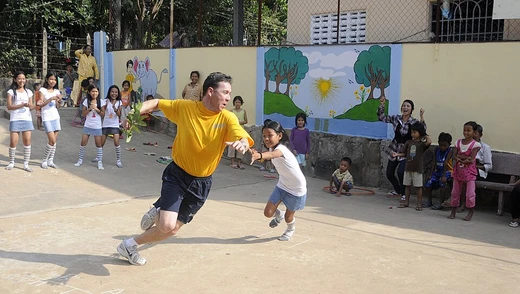
Korean traditional games are deeply woven into the calendar and the social fabric of community life. Yutnori is customarily played on the first day of the New Year, its roots in divination rituals lending the opening of the year a ceremonial weight. Kite flying, known as Yeonnalligi, marks the winter season, with a specific period running from New Year's Day to Daeboreum, after which the kite string is deliberately cut so the kite can fly free into the sky. Jegichagi and top-spinning are winter favorites, the latter popular among children who spin heavy birch, jujube, or pine tops on ice or bare ground in groups. Neolttwigi, the standing seesaw game, shines during traditional holidays like Dano and Chuseok, particularly among girls. Ssireum's annual competitions draw broad audiences. What unites these games is their communal nature—played in pairs, teams, circles, or families, they demand cooperation, turn-taking, and shared laughter. Even gonggi, which can be played alone, thrives when shared among friends. The games bind people to each other and to the turning of the seasons.
Gallery

Frequently Asked Questions
What is a Seesaw?
A Seesaw is a long, narrow board balanced on a single pivot point, typically set at its center. One end rises as the other drops, producing the signature back-and-forth motion kids use to play together.
How does a Seesaw work mechanically?
It operates as a simple lever: the board is the beam, the central support is the fulcrum, and the two riders on either side supply the effort and load. That arrangement is what drives the continuous up-and-down cycle.
What are other names for a Seesaw?
In northern and western U.S. states it's widely called a teeter-totter, while southeastern New England uses tilt or tilting board. Appalachia goes with ridey-horse, and coastal North Carolina calls it a hickey-horse.
Where do kids usually find a Seesaw?
You'll most often see one at a public park or on a school playground, where it serves as a shared piece of play equipment. It's built for two children to take turns rising and falling together.
Where does the name 'Seesaw' come from?
The term is an Anglicisation of the French phrase ci-ça, meaning 'this-that,' which neatly captures the alternating motion of the board. Some accounts also tie the word to the repetitive up-and-down stroke of a saw blade.
More in Children'S Games 1-18
Spotted an error? Know more?
This is a living reference — every entry is fact-audited, and reader corrections feed straight into our audit queue. Suggest an edit · See this site's audit record