Frequently Asked Questions
The most-asked questions about children's games.
What counts as a "children's game"?
Any game—board, card, video, or outdoor—designed with simplified rules, age-appropriate themes, and difficulty calibrated for younger players, typically targeting ages 3 through 12.
What are the most widely recognized children's games?
Franchises like Mario, Pokémon, and Minecraft dominate the video-game side, while physical staples such as Candy Land, Uno, and tag remain household names across generations.
What age brackets do children's games usually target?
Most are segmented into toddler (3-5), early-elementary (6-8), and pre-teen (9-12) tiers, with reading requirements, rule complexity, and thematic content scaling across each band.
Where should a parent or newcomer begin exploring?
Picking a well-known franchise like Pokémon or a physical classic such as hide-and-seek gives an easy entry point before branching into niche or newer titles.
What distinguishes a "children's game" from a "family game"?
Children's games generally remove reading-heavy rules, complex strategy, and mature themes entirely, whereas family games often rely on older players to carry the strategic load.
What are some landmark moments in the history of children's games?
The 1985 launch of the Nintendo Entertainment System brought dedicated kids' gaming into mainstream homes, and the 2009 release of Minecraft later turned open-ended sandbox play into a global phenomenon for younger audiences.
Do children's games offer real educational benefits?
Research consistently links them to improved spatial reasoning, turn-taking, basic numeracy, and social negotiation skills, though the degree of benefit varies by game type and play context.
What are the main categories of children's games?
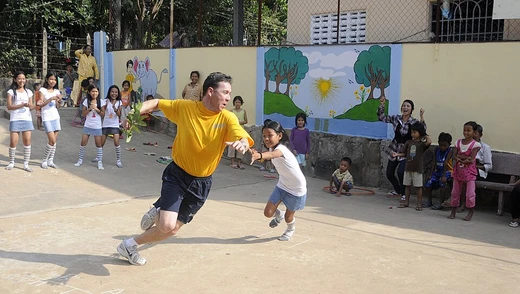
They fall broadly into video games, board and card games, outdoor/physical games like tag and four-square, and digital-toy hybrids such as interactive story readers.
How have children's games evolved from the 1980s to today?
The focus shifted from largely local, single-player or small-group play to online-connected experiences, though physical outdoor games and tabletop titles have seen a strong modern revival.
What design principles go into making a game suitable for kids?
Creators typically prioritize short session lengths, forgiving difficulty curves, minimal text requirements, and content free of violence or mature themes to match the target age group.